










Coffee is bitter.
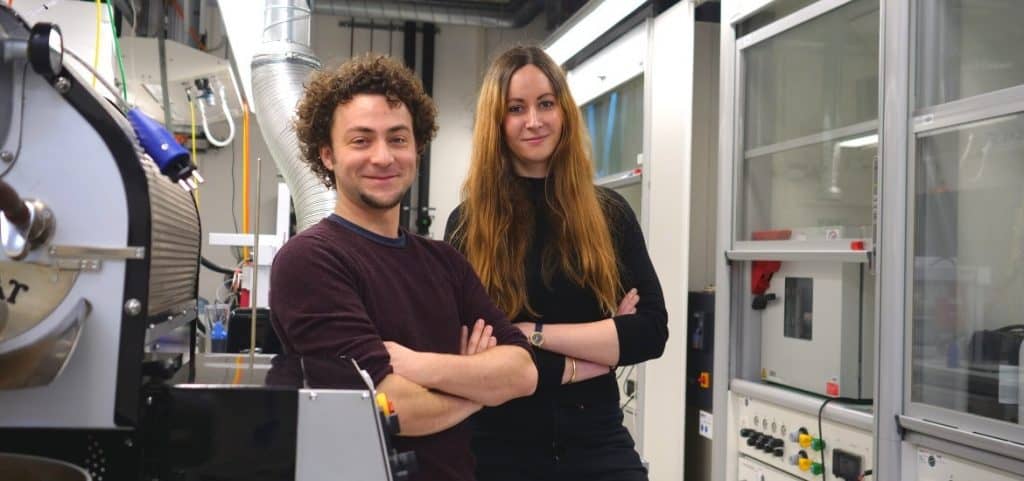
Bitterness is as much a part of coffee's flavor profile as water is needed for preparation. And nobody knows more about this than scientist Sara Marquart. Sara conducts research at the Zurich University of Teacher Education in the field of coffee (ZHAW Wädenswil, Coffee Excellence Center) and has written a doctoral thesis on the topic of bitterness in coffee. In this article, she summarizes the most important aspects surrounding bitterness in coffee.
Why does bitterness have a bad reputation?
Many people start their day with a cup of coffee in the morning, whether brewed as a hand filter or extracted as an espresso. In addition to the aroma, the smell of roasty, chocolatey, or fruity-berry flavors, coffee also enchants us with its taste. But what actually makes up the taste of coffee?
In addition to a pronounced, sometimes fruity acidity, bitterness stands out especially. However, bitterness in coffee has not always had a good reputation. This is understandable, as most people associate bitterness with an unpleasant taste sensation. This can be traced back to the fact that bitter taste receptors represent an evolutionary protection mechanism for humans. In earlier times, when there were no encyclopedias or Wikipedia, people didn't know whether a fruit was edible or poisonous. Our ancestors' sensitive bitter receptors helped them immediately spit out the potentially poisonous fruit (Fischer, et al. 2005). However, there are also many compounds in foods that taste bitter but primarily have health-promoting properties. And here we are back to coffee: coffee possesses a complex variety of different bitter-tasting compounds that have a range of different health effects.
Is bitter the same as bitter?
Bitterness is not always the same as bitterness. For humans, there is a bitterness that is perceived as pleasant, such as that found in beer, chocolate, tea, and some coffees. But there is also a bitterness that is perceived as very unpleasant in some medicines or plants, such as bitter cucumber or bitter melon. Depending on the bitter-tasting substances they contain, these trigger a stimulation on our tongue and in our oral cavity at the bitter taste receptors. This stimulus travels via nerve pathways to our brain, where it is interpreted by us. In addition to the type of bitter-tasting substance, the interpretation by our brain is the decisive factor in whether we perceive the food we just tasted as pleasant or unpleasant.
The bitter taste is a very strongly culturally dependent sense of taste that depends primarily on our genetics and conditioning. People in Central Europe, for example, who come into contact with many bitter foods such as the aforementioned beer and coffee throughout their lives, are not only genetically but also socio-culturally rather insensitive to bitterness compared to people in other parts of the world (Ong, et al. 2018). One could therefore say that people in Central Europe and North America, due to their genetics and cultural conditioning, would reach for bitter coffees much more frequently than people in Southeast Asia, who might prefer a sweetened and less bitter coffee variant. This is particularly important with regard to the alignment of the product portfolio and customer-oriented roasting and preparation of coffee products. After all, roasters and coffee shop operators should always ask themselves one question – what coffee tastes good to my customers and not, what coffee tastes good to me personally (Marquart 2018).
Why is coffee bitter?
The actual question, however, is what makes coffee bitter and is there a coffee that doesn't taste bitter? Basically, coffee always tastes bitter. This is partly because coffee contains caffeine, which tastes bitter, but mainly because of the composition of coffee and the reactions that occur during roasting.
Sour versus bitter: chlorogenic acids and chlorogenic acid lactones
The most important of these reaction cascades comes from a group of substances called chlorogenic acids. Of these sour-tasting chlorogenic acids, depending on the type, variety, and growing region, there are approximately 25–40 different ones in coffee (Clifford, et al. 2003). These chlorogenic acids decompose during roasting into the bitter-tasting chlorogenic acid lactones (Figure 1).
 Figure 1: The dominant, sour-tasting chlorogenic acid (left) and the corresponding chlorogenic acid lactone (right), which tastes bitter.
Since there are a variety of different chlorogenic acids, there are also countless different molecules of the corresponding lactones, which all taste bitter. The most important of these lactones is 3-O-chlorogenic acid lactone (3-CGL), whose formation and breakdown during roasting is well documented. Chlorogenic acid already breaks down after five minutes of roasting and 3-CGL forms. After approximately 7.5–10 minutes, depending on the roasting temperature and the chosen coffee, the formation of bitter lactones reaches its maximum (Figure 2, Farah, et al. 2005). These lactones are known for their distinctly mild, pleasant, and almost velvety bitterness modality (modality describes the type of bitterness). It is these that give coffee its incomparable bitterness.
 Figure 2: Formation of 3-O-chlorogenic acid lactone during roasting of Coffea Arabica cv. Bourbon.
From pleasant to harsh bitterness
As you can see well from the curve, the bitter-tasting lactones react further. For with longer roasting time and higher temperatures, phenylindanes can form from both the chlorogenic acids and the chlorogenic acid lactones. These phenylindanes represent another class of compounds that taste very harshly and bitterly.
 Figure 3: A phenylindan isomer. There are many different and similar compounds among the phenylindanes, which all taste very unpleasantly bitter for a long time.
Since phenylindanes could form from both acids and lactones, there are also a number of different, structurally similar compounds (so-called isomers) among the phenylindanes, which all taste unpleasantly bitter and long-lasting. Many may recognize this exact type of bitter taste from very dark roasts that are subsequently prepared with hot water as an espresso. The phenylindanes are thus also the end station in the development of bitter taste during roasting. For phenylindanes can form even more complex structures through polymerization (i.e., a linking of many individual phenylindanes into one large molecule) (Frank, et al. 2007). However, from a chemical perspective, these large phenylindanes eventually become so large that they can no longer be absorbed by our bitter taste receptors and accordingly have no taste for us humans.
And what about caffeine?
One last suspect in the range of bitter-tasting substances remains, and that is caffeine. Caffeine itself does taste bitter, but it is hardly broken down during roasting and accounts for only about 10% of the bitterness of coffee. This is partly because both chlorogenic acid lactones and phenylindanes taste much more bitter, but also because the chlorogenic acids "complexify" the caffeine contained in the coffee drink, i.e., bind to it and thus make it less perceptible to human receptors.
Bitterness in coffee – conclusion
In general, the findings of research can be summarized in Figure 3. First, the chlorogenic acids are broken down into the pleasantly, coffee-like bitter-tasting chlorogenic acid lactones. Both chlorogenic acids and lactones decompose further during roasting into the harshly, metallically, and long-lastingly bitter-tasting phenylindanes. And caffeine? It only decomposes to a very small extent during roasting.
 Figure 4: Progression curves of the formation of various bitter-tasting substances during coffee roasting, depending on the roast degree.
How do you roast mild, non-bitter coffee?
The art of roasting lies in adapting the roast to the green coffee. Science can only provide a starting point here; the correct shaping of bitterness through proper roasting is in the hands of the roasters. Through their experience, they understand how to control the invisible reactions in the coffee and adapt them to the desired end result – dark espresso roast or light filter coffee – accordingly (Marquart 2019).
Good coffee = balance between acidity and bitterness
The chlorogenic acid lactones represent a very special group of bitter-tasting substances because coffee owes its coffee-like bitterness primarily to these compounds, which most people find pleasant. Depending on the composition – one might almost say – symphony of lactones, the roasted coffee unfolds a very finely balanced, mild, velvety bitterness when the beverage is enjoyed. This bitterness is in benevolent interplay with the already mentioned fruity acidity of coffee, which is caused by compounds such as apple, lemon, chinnic, or the aforementioned chlorogenic acids.
If you roast the coffee too long or too dark, you throw this pleasant bitterness and fruity acidity out of balance. On the one hand, the acidic compounds decompose, depriving the coffee of a wonderful part of its flavor complexity; on the other hand, the harsh, metallically-bitter phenylindanes form. This can be compared almost to an over-salted dish: the right amount of salt gives a dish that certain something, too much of a good thing ruins the dish irreparably.
In conclusion, one might say that coffee occupies a unique position due to the chlorogenic acids it contains. There are hardly any foods in the world that contain these compounds. This, combined with skillful roasting, gives coffee precisely its very characteristic and fine bitterness, which makes it and its taste experience so special. The balance of its acids, its bitterness, and above all its aromatic refinement makes it something uniquely unparalleled. Properly roasted, ground, brewed, or extracted, coffee becomes a balancing act of enjoyment.
Further reading:
Clifford, et al. Hierarchical Scheme for LC-MSn Identification of Chlorogenic Acids, J. Agric. Food Chem. 2003, 51, pp. 2900–2911.
Farah, et al. Effect of roasting on the formation of chlorogenic acid lactones in coffee, J. Agric. Food Chem. 2005, 53, pp. 1505–1513.
Fischer, et al. Evolution of bitter taste receptors in humans and apes, Molecular biology and evolution. 2005, 22, pp. 432–436.
Frank, et al. Structure determination and sensory analysis of bitter-tasting 4-vinylcatechol oligomers and their identification in roasted coffee by means of LC-MS/MS, J. Agric. Food Chem. 2007, 55, pp. 1945–1954.
Marquart The Rainbow of Taste. 2018, Kultur & Technik.
Marquart Roasting – a story of technical innovations. In Cosmos Coffee, 1st ed.; Marquart, S.; Jahreis, M.; Möllers, N., Eds.; Deutsches Museum: München, 2019.
Ong, et al. Understanding the role of bitter taste perception in coffee, tea and alcohol consumption through Mendelian randomization, Scientific reports. 2018, 8, p. 16414.
About the author Sara Marquart
Sara Marquart is a food chemist and conducted research on the roasting and bitterness of coffee in her doctoral thesis. Currently, she works at the Coffee Excellence Center of the Zurich University of Teacher Education on "Atomo Coffee," molecular coffee without the bean. Previously, as a curator at the German Museum in Munich, she realized the special exhibition Cosmos Coffee.
Further links on bitterness
We have described more about the sensory evaluation of Fine Robusta in an article. In the evaluation of Fine Robusta, at least the balance of bitterness to sweetness is evaluated sensorily. However, the approach could go further by describing the different qualities of bitterness, just as we do with acidity or body.
As part of the SCA's Coffee Expo, Sara also spoke about bitterness. This resulted in a podcast in English, which you can listen to here.