




Giomar - Espresso from Ecuador


Giomar - Coffee Info
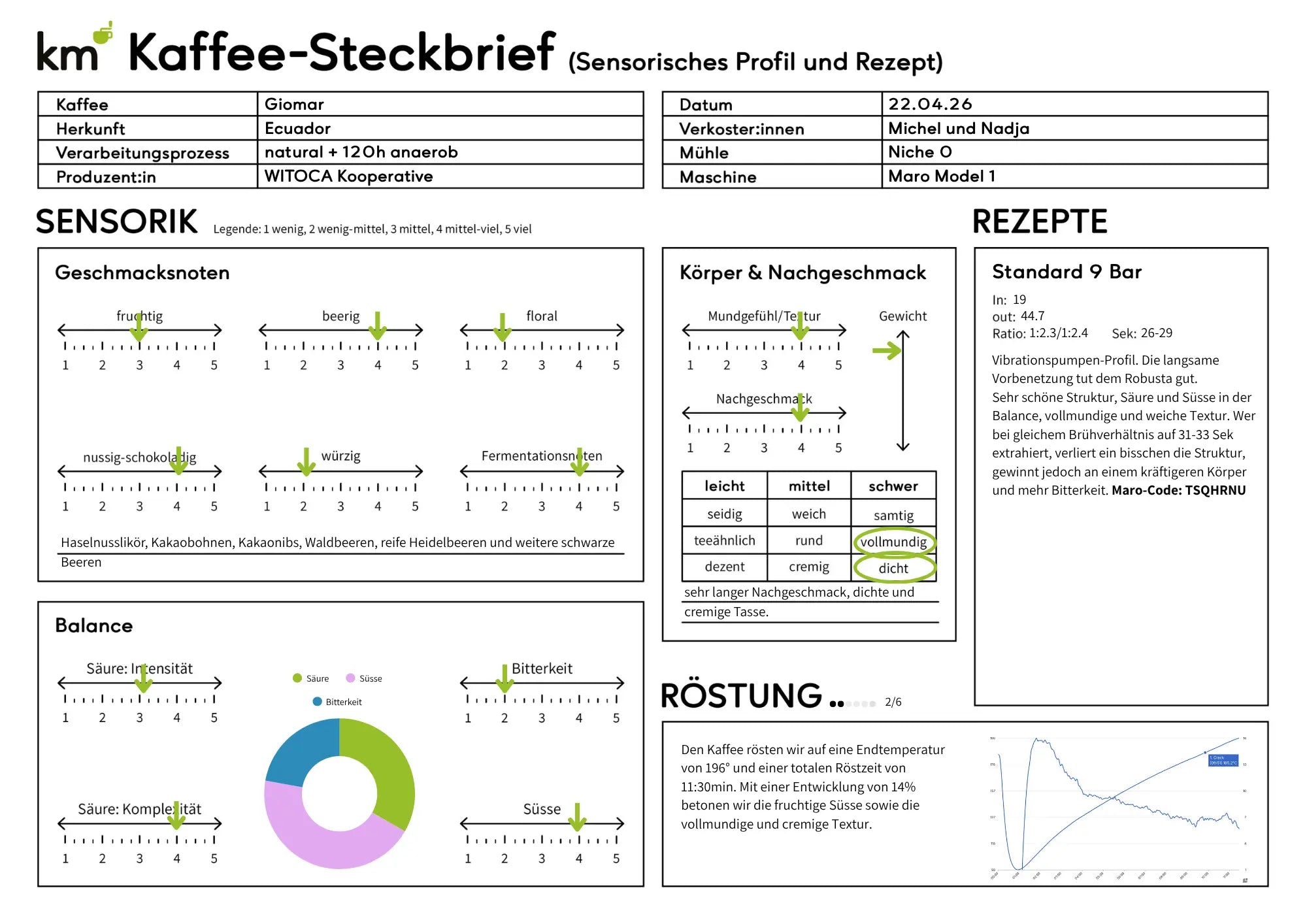
| Taste: | Nougat, hazelnut liqueur, fruity chocolate, forest berries |
| Origin of beans: | Sumaco Biosphere Reserve, Loreto, Orellana, Ecuador |
| Producer: | WITOCA Cooperative |
| Varieties: | Napo Payamino, 100% Robusta |
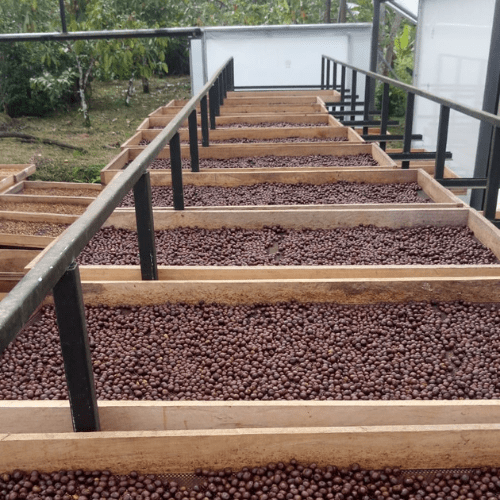
| Post-harvest process: | Fermentation for 120h in barrel, then dried in the cherry |
| Cultivation philosophy: | Agroforestry system. Using the native Chakra cultivation method, they forgo external inputs such as fertilizers and pesticides while protecting the rainforest. |
| All our coffees are sold as whole beans. | |
How we prepare the coffee

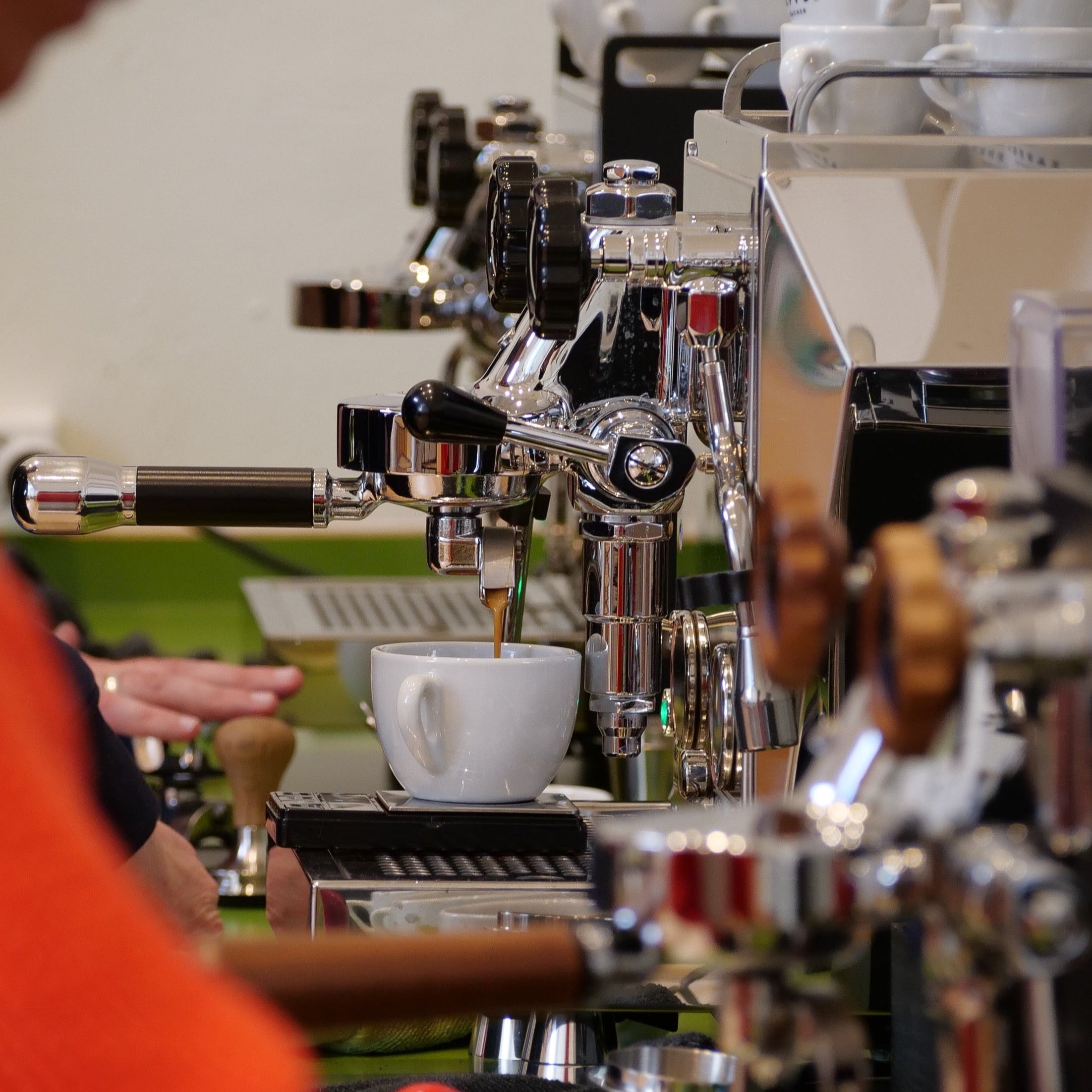
Slow pre-wetting through the vibration pump is good for the coffee. If you have the ability to influence flow or pressure, you can try a slow cake wetting of 12-13 seconds.
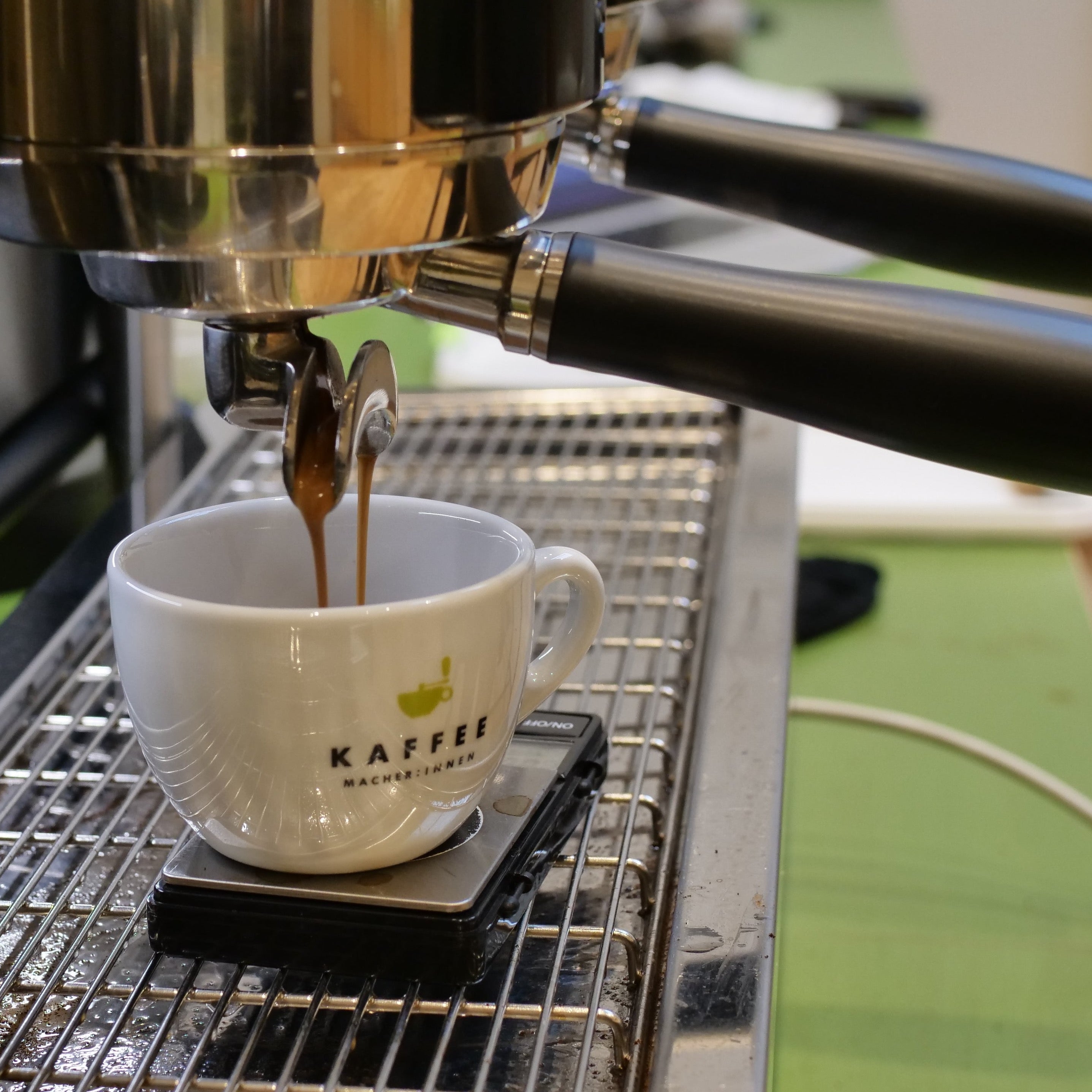
However, with the standard 9 bar profile we achieved excellent results. With a drink ratio of 1:2.3/1:2.4 and an extraction time of 26-29 seconds, we get a super structured cup where the acidity and sweetness are very harmonious. This coffee has a very complex acidity for a Robusta, accompanied by a full-bodied and very soft texture.
If you pull the coffee at the same brewing ratio for 31-33 seconds, you lose a bit of the compact structure, but gain even more body and a pleasant bitterness.

Why does the coffee taste the way it does?
The WITOCA Cooperative specializes in special processing methods. In addition to washed Canephoras, they make many honeys and increasingly naturals - though the high humidity in the Amazon region places high demands on post-harvest processes. The naturals, coffees dried in the cherry like this one, WITOCA can make in August and September when there is hardly any rain. The fermentation of over 120 hours in a sealed barrel creates the berry aromas of the coffee.
This natural of the Canephora variety Napa Payamino convinced us. This variety is a local clone and produces very large beans. The coffee itself brings considerable acidity, and the intensive post-harvest process gives the coffee berry and chocolate notes.
Why did we buy this coffee?
Giomar Hidalgo, or simply Gio, roasted and served coffee, and now she imports it from her home country Ecuador. The WITOCA Cooperative in the Amazon is a small cooperative that Gio co-founded. They receive coffee from 13 families, all of whom practice agroforestry, growing between existing trees. Using the native Chakra cultivation method, they forgo external inputs and protect the rainforest.
This coffee shows, like hardly any other, how Canephora (Robusta), so often maligned, can taste when the same precision and philosophy as top Arabicas is applied. It demonstrates the diversity of coffee and teaches us all to reconsider our acquired tastes.
How do we roast this coffee?
We roast the Napa Payamino from WITOCA as a 15kg batch, so with somewhat more coffee than we would roast a filter coffee, but with less coffee than we roast other complex espressos (20kg). Why? Because we prefer a fast roast for Canephoras. Canephoras contain twice as much chlorogenic acid and break down during the roasting process into caffeine and quinic acid, which in longer and hotter roasts can lead to more bitterness. With the short roast at a lower end temperature, we retain the naturally occurring freshness in the coffee and focus on the silky texture.
Shipping also possible via Coffee Letter
All our coffees can be ordered in the form of the Coffee Letter. It is treated like a regular letter and arrives in your mailbox. This reduces postage for 250g of coffee from 7 to 2.5 francs. At checkout you can choose between Coffee Letter, A-Post and B-Post options.

Garantierte Herkunft
Wir wissen exakt wo unser Kaffee herkommt und wann dieser wo geröstet wurde.

Persönliche Beratung
Wir sind bei Fragen und Problemen als Ansprechpartner für dich da.

Schneller Versand
Lieferung aus Deutschland oder der Schweiz

Gratis Versand in CH ab 120 CHF